Bible Study, Trinity Bible Church Cypress, October 4, 2026
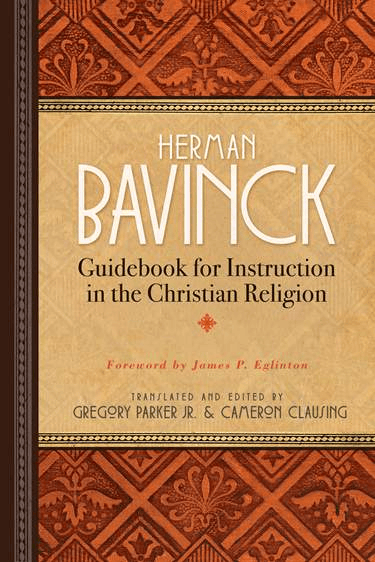
Below are my teaching notes from adult Bible study class, using Bavinck’s Guidebook (originally published 1913, see below) and supplemented with his Reformed Dogmatics [= RD]. I covered chs. 4–5 on “Holy Scripture” and “Scripture and Confession,” respectively. In my notes and handouts I followed Bavinck’s section numbering for structuring the study. My occasional insertions into the thoughts and lists that are Bavinck’s are in brackets. Otherwise, the explanatory bullet points and Q&A are my own unless in quotation marks.
Bavinck, Herman. 2022. Guidebook for Instruction in the Christian Religion. Translated and edited by Gregory Parker Jr. and Cameron Clausing. Peabody, MA: Hendrickson.
———. 2003. Reformed Dogmatics. Vol. 1. Prolegomena. Edited by John Bolt. Translated by John Vriend. Grand Rapids: Baker Academic.
Chapter 4: Holy Scripture (cont’d)
- Holy Scripture is distinct from revelation.
- Distinct from revelation – Scripture is not revelation itself but a document of revelation.1
- Remember from last week: the deposit or crystallization of special revelation
- Bavinck means that Scripture is the result of the special revelation, not the event.
- But we can, in fact, call the result of revelation “revelation” also.
- And we can call all of Scripture “special revelation” to us.
- Yes, we do sometimes have revelation without inspiration, or vice versa.
- Connected with revelation – Scripture, as the word of God, completes revelation.
- Calvin: “For by his Word, God rendered faith unambiguous forever, a faith that should be superior to all opinion.”2
- Distinct from revelation – Scripture is not revelation itself but a document of revelation.1
- Scripture is the Word of God.
- God often instructs the prophets to record the revelation they received in writing (e.g., Exod 34:27; Deut 31:19; Isa 8:1; Jer 30:2; Dan 12:4).
God prohibits adding to/deleting his words (Deut 4:2; 12:32; Prov 30:6 [Rev 22:18–19]).- Moses was the first author of Scripture, and the last book written before he died leaves Israel with a warning.
- John was the last author of Scripture, and (I believe) the last book written until Jesus’s return leaves the church with the same warning.
- Revelation has long been called the “capstone” of the canon or Bible.
- Thus, from end to end Scripture is “closed” to everyone but God.
- Question: How then did God add to Scripture via human authors?
- God proved his spokesmen via miracles and predictions (Deut 13:1–5; 18:15–22).
- The prophets were well aware that they were writing the word of God.
- The declarative formula: “thus says the Lord,” “the word of the Lord came to me,” “the vision/word/burden of the Lord,” etc. (Jer 1:4; Amos 1:3; Nah 1:1)
- [Scripture exhibits a “canon consciousness” (e.g., Exod 24:3–4, 7; Deut 31:9–13; 24–26; Josh 1:8; 8:30–35; 24:24–28; 1 Sam 10:25 [cf. 8:11–18; 1 Chron 29:29])]
- I.e., they were aware that they were writing God’s words as a canon.
- Question: What do I mean by canon? Something standard, authoritative.
- This comes from the Greek kanōn, “ruler; rule, standard”
- And even earlier from the Hebrew qaneh “(measuring) rod”
- The prophets were aware that they were writing a collection of books (together one “book”) to be the authoritative rule for God’s people forever.
- [Now, you asked last week about the canon, so let’s spend a few minutes here.]
- Volunteer: Exod 24:3–4, 7 – the book of the covenant (Exod 20–23)
- Then, fast-forward forty years to the end of Moses’s life.
- Volunteer: Deut 31:9–13 – the book of Deuteronomy
- Volunteer: Deut 31:24–26 – the book of Deuteronomy (cont’d context)
- Joshua is commanded not to depart from the book of the law (1:8).
- He follows the ceremony of writing it on a monument and reading it aloud when Israel enters the promised land (8:30–35).
- Fast-forward forty years again, to the end of Joshua’s life.
- Volunteer: Josh 24:24–28 – the book of Joshua
- Moses and Joshua (but especially Moses) stood at the fountainhead of Israel’s canon, traditionally dated to the 15th/14th c. BC.
- Fast-forward to the time of Samuel, 11th c. BC, and we begin to get the anonymous, prophetic histories we call the “historical books.”3
- Question: What books are those? Judges, Ruth, Samuel, Kings.
- Now, Chronicles is included in this section of our English Bibles but was probably the last book of the OT to be written. Hence Hebrew Bibles position Chronicles last.
- Volunteer: 1 Sam 10:25 – the rule of the kingdom (perhaps now 8:11–18)
- This scroll may have later been incorporated into 1 Sam.
- While 1 Chron 29:29 clearly refers to Samuel’s history writing, he could not have written beyond 1 Sam 24 (cf. 1 Sam 25:1).
- Finally, the books named after writing prophets begin in the 8th c. BC (Hos 1:1; Amos 1:1; Isa 1:1, etc.), with Joel and Obadiah possibly being 9th c.4
- Prophets could read the books of earlier prophets, because they were kept by faithful priests, in the temple precincts (when able), copied, and (sometimes) distributed in Israel (cf. 2 Kgs 22:8ff.; 2 Chron 17:7–9; Dan 9:2).
- If you want more detail, I taught two lessons back in January on “the Reliability of the OT Canon and Text,” which are Sermon Audio.
- Volunteer: Exod 24:3–4, 7 – the book of the covenant (Exod 20–23)
- The NT testifies that the OT is one organic whole with God as its author.
- Indirectly – Jesus and the apostles quote the OT by saying, “it is written,” “Scripture says,” “God says,” “the Holy Spirit says,” etc.
- Question: How else did the NT authors refer to the OT? As “the Law” or “the Law and the Prophets” (Matt 7:12; 11:13 // Luke 16:16; John 1:45; Acts 13:15; 24:14; Rom 3:21; cf. 2 Kgs 17:13; Zech 7:12).5
- The interchangeability of these terms shows that Jesus and the apostles testified that the OT in all its parts was one whole.
- Directly
- Jesus said “the Scripture cannot be broken,” i.e., separated (John 10:35).6
- As a whole, Scripture cannot be disjointed or contradict itself.
- Jesus came to fulfill, not abolish the OT (Matt 5:17; Luke 24:44).
- Here’s another case of the OT called “the Law and the Prophets.”
- Jesus fulfills them, so it is right to understand him as their goal.
- Peter said the prophetic word is a reliable light on our path, since it was not developed by the prophets themselves (2 Pet 1:19–21; cf. 1 Pet 1:10–12).
- He said in 1 Pet 1:12, “It was revealed to them that they were serving not themselves but you.”
- Paul said the “sacred writings” (= “all Scripture” = OT) are able to make us wise unto salvation and are “breathed out by God” (2 Tim 3:15–16).
- More on this in a minute.
- For now, the point is, the NT testifies that the OT is the one Word of God.
- Jesus said “the Scripture cannot be broken,” i.e., separated (John 10:35).6
- Indirectly – Jesus and the apostles quote the OT by saying, “it is written,” “Scripture says,” “God says,” “the Holy Spirit says,” etc.
- Jesus chose, called, and trained his apostles to act as his witnesses and [empowered by the Holy Spirit] give us the NT (John 14:25–26; 15:26–27; 16:12–13).
- Volunteer: John 15:26–27 – the grounds and purpose of their writing
- Volunteer: John 14:25–26 – the Gospels were pre-authenticated
- Volunteer: John 16:12–13 – the Epistles and Revelation were pre-authenticated
- Revelation becomes Scripture via inspiration.
- The nature of inspiration (as the word is generally used) – “to have [the] thoughts of others in his consciousness and be guided by others in his thinking”
- Cf. “inspiration” as in education, manipulation, demonization, and art/genius
- “When such phenomena already occur in the ordinary life of people… there is no basis for combating the influence of God on the thinking and willing of his creatures” (p. 42).
- Now, I do not think this section in Bavinck is as helpful as the rest.
- Question: Has anyone had this experience of being confused or others being confused about what the inspiration of Scripture means?
- My manager at work once argued: “How can you say the inspiration of the Bible is the authority when other people may have a different inspiration?”
- My answer was, “That’s not what inspiration in the Bible means.”
- So, let’s go off script from Bavinck for a minute and talk about this term.
- Cf. “inspiration” as in education, manipulation, demonization, and art/genius
- The nature of inspiration (as the word is generally used) – “to have [the] thoughts of others in his consciousness and be guided by others in his thinking”
Excursus on the Meaning of Inspiration
- Question: What are the clearest NT passages on biblical inspiration? 2 Tim 3:16; 2 Pet 1:21.
- Turn to: 2 Tim 3:14–17 (read)
- Question: What translations do we have in the room for “all Scripture is …”?
- KJV or NKJV – “given by inspiration of God”
- NASB, CSB, or NET – “inspired by God”
- ESV – “breathed out by God”
- NIV or LSB – “God-breathed”
- Inspiration comes from the Latin translations of this Greek compound word “God-breathed.”
- Note that this verse is the only instance of the word in the Bible.
- Also note it is applied not to the prophets or apostles but to the Scriptures themselves.
- The imagery is of something “breathed out” not “breathed into.”
- Question: What is something breathed into in the biblical story? Man (Gen 2:7).
- Question: What is breathed out? Words (Ps 33:6; Prov 12:17; 14:5; Isa 11:4).
- You do not inflate words like a balloon and pass them on; you exhale them!
- But the word in-spired could sound like something breathed into by God, as if the books of the Bible were merely human products which God afterward endued with divine quality.
- For that reason, B. B. Warfield (Princeton Seminary theologian and friend of Bavinck) distinguished Scripture as “(ex-)spirated” but God’s spokesmen as “in-spired” strictly speaking.7
- That terminology didn’t catch on, and we don’t have to force it.
- But we relish the truth that Scripture sees no distance between itself and God’s mouth!
- God claims these words as his very own, trustworthy speech, as if we were face to face.
- Since the word inspiration can be misleading, we must use it with precision.
[Excursus Ended]
- Revelation becomes Scripture via inspiration (cont’d).
- The explanation of inspiration in Scripture
- Scripture’s distinction between different influences of the Holy Spirit:
- God’s Spirit in the world/church – “led” (Rom 8:14)
- God’s Spirit in the prophets/apostles – “carried” (2 Pet 1:21)
- Turn to: 1 Pet 1:19–21 (read)
- The phrase “more fully confirmed” in v. 19 is all one word in Greek, meaning the OT is “altogether reliable” (NET, NIV11).8
- On that note, Peter explains why the OT is trustworthy.
- The prophets were “carried along” or “borne along” by the Spirit.
- The same word is used of a ship in wind (Acts 27:15, 17).
- The Spirit, like wind in the sails of a ship, empowered men.
- I’ll say more about what that looks like for Scripture below.
- Scripture’s formulae
- Scripture is spoken from the Lord by (through means of) the prophet (Matt 1:22; 2:15, 17, 23; 3:3; 4:14, etc.).
- God spoke by the mouth of his prophets (Luke 1:70; Acts 1:16; 3:18; 4:25).
- “His prophets and apostles… served as his organs” (p. 43).
- Not mechanical – they were not unaware or unwilling mouthpieces; they themselves also spoke (2 Pet 1:21 [1 Cor 2:10–13; 2 Sam 23:1–2]).
- Volunteer: 2 Sam 23:1–2
- Bad examples: secretaries, pens in his hand, puppets, “channels” (trances)
- But organic – God has engaged their whole personality, which he himself formed.
- Volunteer: 1 Cor 2:10–13 (verbal inspiration)
- The authors remain “entirely conscious of themselves.”
- But their activity is “comforted, empowered, and purified” by the Spirit.
- They themselves:
- investigate (Luke 1:3)
- remember (John 14:26; 1 John 1:1–3)
- make use of historical sources (Num 21:14; Josh 10:13, etc.)
- compose their songs from their own experiences
- [chose words (1 Cor 2:13)
- But this all happens just as the Spirit guides them to do (1 Pet 1:10–12)
- This was put more fully in Bavinck’s Reformed Dogmatics
- Bavinck: “The Holy Spirit… having prepared the human consciousness of the authors in various ways… now, in and through the writing process itself, made those thoughts and words, that language and style, rise to the surface of that consciousness, which could best interpret the divine ideas for persons of all sorts of rank and class, from every nation and age” (RD, 1:438)
- It was beautifully put by Bavinck’s American friend B. B. Warfield:
- Warfield: “What if the colors of the stained-glass window have been designed by the architect for the express purpose of giving to the light that floods the cathedral precisely the tone and quality it receives from them? What if the word of God that comes to his people is framed by God into the word of God it is, precisely by means of the qualities of the men formed by him for the purpose, through which it is given? When we think of God the Lord giving by his Spirit a body of authoritative Scriptures to his people, we must remember that he is the God of providence and of grace as well as of revelation and inspiration, and that he holds all the lines of preparation as fully under his direction as he does the specific operation which we call… ‘inspiration.’”9
- Brothers and sisters, rest assured that God had this all planned out long before you had questions about the Bible or its history.
- And if you know what Jesus is like and you trust him for your salvation, you can trust him with your guidebook too.
- Scripture’s distinction between different influences of the Holy Spirit:
- The explanation of inspiration in Scripture
Endnotes
- It is accurate, however, to also call Scripture “revelation” (as the product of God’s acts of revelation). ↩︎
- Calvin, Instit. 1.6.2. ↩︎
- They must have been written piecemeal, with only certain statements being datable (e.g., 1 Kgs 8:8), and edited subsequently by those compiling them, indicated by certain editorial comments (e.g., 1 Sam 9:9). ↩︎
- Irvin A. Busenitz, A Commentary on Joel and Obadiah (Geanies House, UK: Mentor, 2003), 11–34, 228–338. ↩︎
- Some think “the Psalms” in Luke 24:44 represents a third category according to Jewish custom: the Writings. These are not additional books but only an additional sub-grouping of books, essentially, the wisdom books, Daniel, and the exilic/post-exilic historical books (Esther, Ezra-Neh, Chron). But we should not make too much of this verse, since “Psalms” would be an inexact reference to the Writings and, even if it meant the Writings, would be alone in the NT. ↩︎
- The Greek word here for “broken” can mean “to untie, loosen,” “to destroy,” or “to break to pieces.” It is translated as “break up” in Acts 27:41 and “break down” in Eph 2:14. The point Jesus makes in John 10:35—a point with which his opponents agreed—is that Scripture cannot be inconsistent or self-contradicting. It “cannot” because it is God’s Word. ↩︎
- B. B. Warfield, “God-Inspired Scripture,” The Presbyterian and Reformed Review 11, no. 41 (1900): 119–30, https://commons.ptsem.edu/?toc=pts-journals/prr/19001141. ↩︎
- The word is translated “guaranteed” in Rom 4:16. It occurs 9x in the NT; only here translated as a comparative. The context is not best understood as a comparison of which is the more trustworthy proof of Jesus’s second coming, “the prophetic word” (OT) or the apostles’ eyewitness testimony (vv. 16–18). Rather, Peter’s point is that the apostles’ eyewitness testimony is reliable evidence alongside already fully reliable evidence that Jesus will certainly come in glory. Richard J. Bauckham, 2 Peter, Jude, Word Biblical Commentary 50 (Dallas: Word, 1983), 223. ↩︎
- B. B. Warfield, “‘The Biblical Idea of Inspiration,’” in The Scripture Cannot Be Broken: Twentieth Century Writings on the Doctrine of Inerrancy, ed. John MacArthur (Wheaton, IL: Crossway, 2015), 159; originally published as “Inspiration,” International Standard Bible Encyclopedia, ed. James Orr (Chicago: Howard-Severance, 1915), 3:1473–483. ↩︎


Leave a Reply