Bible Study, Trinity Bible Church Cypress, September 27, 2026
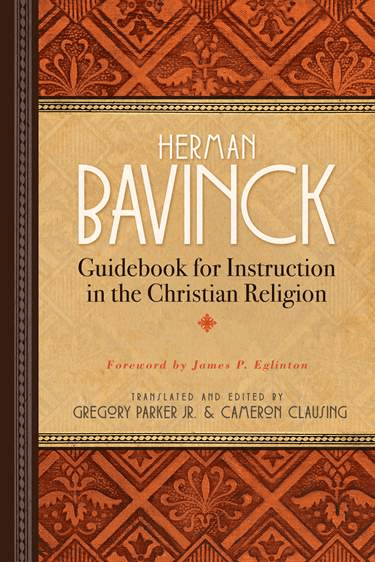
Below are my teaching notes from adult Bible study class, using Bavinck’s Guidebook for Instruction in the Christian Religion (originally published 1913), supplemented with his Reformed Dogmatics [= RD]. These are chs. 4–5 on “Holy Scripture” and “Scripture and Confession,” respectively. However, the brother teaching the week prior did not get to cover all that he wanted, so after reviewing ch. 2, “Revelation (General),” I took a running start in ch. 3, “Revelation (Special).” I provided a handout following Bavinck’s section numbering for structuring the study. My occasional insertions into thoughts or lists that are Bavincks are in brackets. Otherwise, the explanatory bullet points and Q&A are my own unless in quotation marks.
Bavinck, Herman. 2022. Guidebook for Instruction in the Christian Religion. Translated and edited by Gregory Parker Jr. and Cameron Clausing. Peabody, MA: Hendrickson.
———. 2003. Reformed Dogmatics. Vol. 1. Prolegomena. Edited by John Bolt. Translated by John Vriend. Grand Rapids: Baker Academic.
Chapters 2–3: Revelation (General and Special)
- The knowledge of God is only obtainable for man, insofar as God freely wills to make himself known to man (i.e., to reveal himself; Matt 11:27; 1 Cor 1:21; [Eph 1:17–18]).
- This revelation is distinguished between general and special (Pss 14; 19; Rom 1:18–20; 2:12–16).
- Question: What is the basic difference between them? Audience (general vs. particular).
- Another main difference is that general is indirect and the special is direct.
- In general revelation God reveals things about himself and, thus, that he exists.
- In special revelation God reveals himself by acting or speaking (e.g., Num 12:6; 1 Sam 3:21).
- Question: General revelation includes what? Nature, history, and conscience.
- Question: General revelation leaves man without what? Excuse.
- Bavinck: “The fool may say in his heart, ‘There is no God’ (Ps. 14:1),’ but deep in every human soul is the feeling of absolute dependence on an almighty power, a feeling of divinity—just as Calvin called it thereby; also a seed, a principle of religion and morality” (p. 23).
- Calvin: “There is within the human mind, and indeed by natural instinct, an awareness of divinity. … To prevent anyone from taking refuge in the pretense of ignorance, God himself has implanted in all men a certain understanding of his divine majesty.”1
- I like the saying that God doesn’t believe in atheists.
- The LSB translates Ps 14:1: “The wicked fool says in his heart, ‘There is no God.’”
- That is because the Hebrew word for “fool” in this verse is not the most common word (kəsîl) but a word that implies a “wanton fool” (naval); according to one lexicon, one who “has no respect for God or his fellow human beings.”2
- The fact that this kind of fool is high-handed or deliberate in his foolishness is shown by the rest of their description in the psalm.
- Question: What is the basic difference between them? Audience (general vs. particular).
- Through general revelation God exhibits his common grace (Gen 8:21–9:17; Pss 8:3–8; 33:4–5; 145:9; Eccl 3:11; Matt 5:45; Luke 6:35; Acts 14:16–17; 17:26–27; [Rom 2:4;] Jas 1:17).
- Volunteer: Rom 2:4 – Or do you presume on the riches of his kindness and forbearance and patience, not knowing that God’s kindness is meant to lead you to repentance?
- Paul’s argument moving out of ch. 1 and into ch. 2 of Romans is that all people without exception are sinners and thus under God’s judgment.
- That is, every one of us who passes judgment—in any sense believing that someone else deserves condemnation for their sins—ought to immediately recognize that we have enjoyed the mercy of God for our own sins and repent from them.
- But general revelation is insufficient on a number of levels.
- It is insufficient to redeem mankind because it doesn’t convey a saving message.
- It is insufficient because it is obscured by the curse (Gen 3:17–19; Rom 8:18–25).
- It is insufficient to overcome man’s willful blindness (Rom 1:21; Eph 4:17–18).
- Scripture must “spread a light” on nature and history (Ps 119:105, 130).
- Calvin (and Bavinck, RD, 1:321): Scripture, like “spectacles” to “old or bleary-eyed men,” gathers up “the otherwise confused knowledge of God in our minds” and “clearly shows us the true God.”3
- Bavinck: “General revelation awakens and nourishes the need for a special revelation” (p. 27).
- Volunteer: Rom 2:4 – Or do you presume on the riches of his kindness and forbearance and patience, not knowing that God’s kindness is meant to lead you to repentance?
- Through special revelation God meets the need he himself aroused in man’s heart (Acts 17:26–27).
- Manifestation (God operates outside man): appearances, signs, angels, auditions, miracles
- Inspiration4 (God operates within man): dreams, visions, direct revelation (Heb 1:1–2)
- Perhaps a better summary is simply: God’s words, works, appearances, and Son.
- Volunteer: Acts 17:26–27 – “And he made from one man every nation of mankind to live on all the face of the earth, having determined allotted periods and the boundaries of their dwelling place, that they should seek God, and perhaps feel their way toward him and find him. Yet he is actually not far from each one of us.”
- Question: What is the ultimate need God aroused in the human heart? God himself.5
- To be reconciled to God, i.e., “How can I be saved from God’s righteous wrath?”
- To know God, man’s “religious need,” need “for a God who is near” (RD, 1:326).
- Hence, we see the oft repeated promise of God’s “relational presence,” a restoration of what was lost in the garden (Exod 29:45; Lev 26:11–12; Jer 31:33; Ezek 11:20; 37:27; Rev 21:3).
- Bavinck (RD, 1:322): “It is general revelation that keeps that need alive. … It maintains in [human beings] the awareness that they have been created in God’s image and can only find rest in God.”
- The content of special revelation:
- It began immediately after the fall (Gen 3:15) and flowed “in one stream” with general revelation through and after the flood and Babel (9:28).
- Question: Was there special revelation in the garden? Yes.
- Bavinck’s point, however, is that the redemptive promises (what some call the “promise-plan of God”)—which became essential for man to know God only after they were corrupted by sin—and they were given after the fall without delay.
- A new age in the history of revelation began with Abraham (12:1ff.; 17:1ff.).
- Another era was entered with the covenant-making at Sinai (Exod 19:4–6).
- Bavinck: “God added the law… not only to prohibit and inhibit sin but also to make much of it, and to reveal sin, every sin… as a violation of a positive law. By doing so, the law only increasingly highlighted the necessity of the promise” (p. 32).
- In Galatians 3–4, Paul gives us three metaphors for what the law was to Israel: a warden (Gal 3:21–23), a tutor (3:24–25), and a guardian or steward (4:1–7)
- I would clarify that the law (more properly, the Sinai covenant) also served the purpose of being the practical means by which one maintained connection to the Abrahamic covenant, i.e., the promises.
- One could be “cut off” from God’s people (e.g., high-handed blasphemers, whoever ignores the Passover) or joined to them (e.g., Rahab, Ruth).
- Question: When did the old covenant expire? When Christ ratified the new covenant in his blood (Luke 22:20; Heb 8:13).
- The Sinai covenant governed all of OT life from Exod 19 to Mal 4 (v. 4).
- No book of the OT was written outside of the Sinai covenant’s domain.
- Christ was the “true content” of OT revelation (John 5:39; 1 Pet 1:11; Rev 19:10).6
- This could be better put.
- Christ is the fulfillment of the law (Matt 5:17).
- Christ is the culmination of the Abrahamic promises (Gal 3:16).
- Christ is the substance of certain OT shadows (Col 2:17).
- But there is much more “content” in the OT than Christ (Deu 8:3).
- And not everything in the OT is a shadow.
- Christ may be the goal of the OT without being its only meaningful content.
- I prefer a God-centered (theocentric), Christ-climactic (Christotelic) hermeneutic.
- This could be better put.
- It began immediately after the fall (Gen 3:15) and flowed “in one stream” with general revelation through and after the flood and Babel (9:28).
- The purpose of special revelation:
- Bavinck: “Whereas general revelation by itself is able to restrain sin, special revelation must—which has Christ with the fullness of grace and truth as its content—utterly destroy sin in a single person, in humanity, and in the whole world, along with all the terrible consequences of misery and death, which sin drags after it. … Thus, the victory over sin and death, the complete redemption of the world and humanity, the glory of God’s unfathomable mercy and of his manifold wisdom is the glorious purpose of his special revelation” (p. 34).
- Questions so far?
Chapter 4: Holy Scripture
- Holy Scripture is distinct from revelation.
- Distinct from revelation – Scripture is not revelation itself but a document of revelation.7
- I prefer the deposit of revelation or crystalized special revelation (as of a gemstone).
- Just as a gemstone is formed from mineral rich water that runs down into a crevice and under pressure and time is crystalized into a solid form of the same substance…
- So Scripture is of the same substance as the prophetic word in its fluid form, only solidified into a structured deposit.
- Question: Is this a distinction without a difference? No.
- Bavinck means that Scripture is the result of the special revelation (i.e., the direct communication of God).
- But we can, in fact, call the result of revelation “revelation” also.
- And we can call all of Scripture “special revelation” to us.
- It is clearer to say there is a distinction between inspiration and revelation:8
- revelation without inspiration (2 Cor 12:4; Rev 10:4)
- inspiration without revelation (censuses, itineraries; Luke 1:1–4)
- revelation and inspiration separated by time (Jer 36:2)
- Bavinck means that Scripture is the result of the special revelation (i.e., the direct communication of God).
- I prefer the deposit of revelation or crystalized special revelation (as of a gemstone).
- Connected with revelation – Scripture, as the word of God, completes revelation.
- It is not accidental [afterthought] but an element [component] of revelation.
- Other illustrations: [the crystallization,] the seal, the keystone of revelation
- Question: What are the benefits of having God’s Word in written form? Many.9
- Objectivity ⇒ translation, instruction, a rule in church and Christian life
- Preservation ⇒ dissemination, salvation for all generations and peoples
- Treasure
- Calvin: “For by his Word, God rendered faith unambiguous forever, a faith that should be superior to all opinion.”10
- Distinct from revelation – Scripture is not revelation itself but a document of revelation.7
Applications:
- Questions?
- What are some take aways from these doctrines?
- How “special” is this deposit of special revelation to you?
- It is not equaled by a sunset or fellowship group or a hymn or even a sermon.
- God has given us a deposit of his words to us that is a clear and saving revelation of himself and of his will.
- Is the content of this book the most precious thing in this world to you?
- We ought to build our lives around it.
Endnotes
- Calvin, Instit. 1.3.1, 2. ↩︎
- “נבל,” SDBH, https://marble.bible/dictionary?s=נָבָל&db=Hebrew. ↩︎
- Calvin, Instit. 1.6.1. ↩︎
- Bavinck uses the term inspiration for this category of God’s special revelation, but distinguishes it from the inspiration that the prophets and apostles experienced in the writing of Scripture. See below. ↩︎
- Bavinck is somewhat circular: through special revelation God meets man’s need for special revelation. But Bavinck is saying that man needs special revelation because general revelation makes him aware that he needs something beyond what it has given. Hence I ask, What is man’s ultimate need? ↩︎
- I would modify this phrase. “True content” may imply there is superficial or misleading content in the OT that could only be understood if re-interpreted to somehow signify Christ. But Christ may be the center or goal of the OT without being its only meaningful content. Bavinck knows this but often defaults to the familiar, I think excessive, terms of the model of covenant theology to which he subscribes. I prefer a God-centered and Christ-climactic reading of the OT. ↩︎
- It is accurate, however, to also call Scripture “revelation” (as the product of God’s acts of revelation). ↩︎
- James Mook, “Lesson 6,” unpublished course notes, TH605 Theology I (The Master’s Seminary, Fall 2017). ↩︎
- Cf. Deut 17:18–19; 31:9–13, 19–26; Josh 1:8; Pss 111:2; 119:11, 105, 176; Isa 8:16–20; 30:8; Dan 12:4; Mic 4:4; Luke 1:1–4; Acts 17:11; Rom 4:23–24; 10:17; 15:4; 2 Cor 3:14–18; 2 Pet 3:15–16; 2 Pet 1:13–15; Rev 1:3, etc. ↩︎
- Calvin, Instit. 1.6.2. ↩︎


Leave a Reply