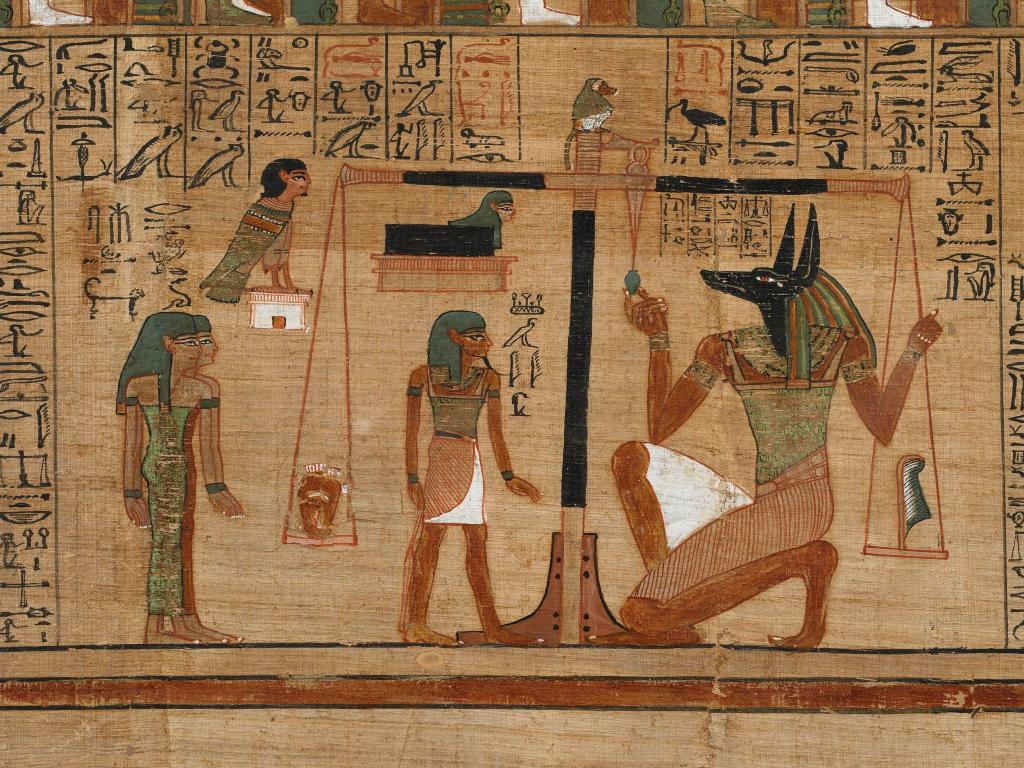
Below is a table of some significant manuscripts of the ancient Egyptian Book of the Dead. These were all composed in the New Kingdom (ca. 1540–1075 BC [Hornung 1999]), around the time when the first scrolls of the Bible were written; although, the spells they contain reach further back into the pyramid and coffin texts of the Old and Middle Kingdoms. The manuscripts I list are of interest, not because the Book of the Dead was some kind of “Egyptian Bible,” as was supposed before this corpus was understood. They are of interest, rather, because the ancient Hebrew scribal culture was heavily influenced by the Egyptian, including its choice of materials (papyrus, leather), instruments (pen, ink), and even the alphabetic script (Schniedewind 2013; Zakhevich 2020).
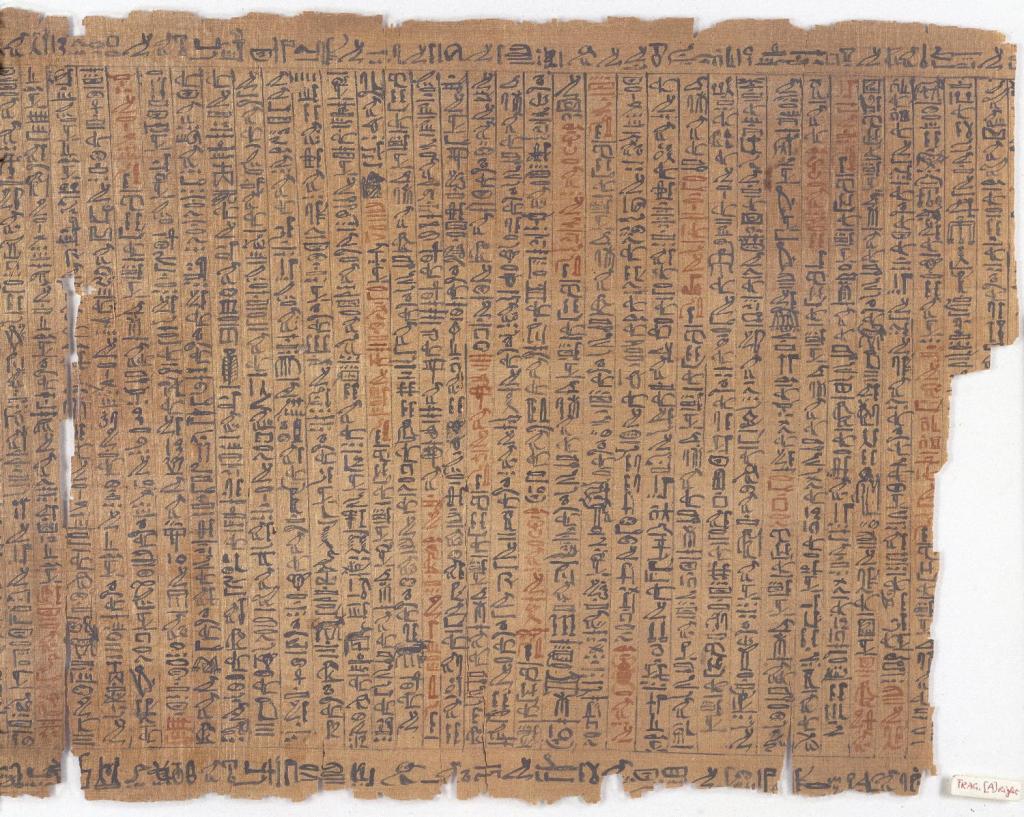
The manuscripts are also of interest to me since some scholars cast doubt on whether texts as long as the Torah could have been written in a burgeoning, still largely non-linear, alphabetic script during Israel’s supposed wilderness wanderings (whether the wanderings be dated to the turn of the 14th century or to the mid-13th century BC). Torah scrolls today, containing all five books of Moses and written with high precision in the Jewish “square” script, are typically 80–90 feet in length. As the table below shows, papyri could presumably have been written up to that length if desired. Of course, variations in letter and column sizes between the modern example and the ancient reconstruction would need to be adjusted for, if we imagine a Torah scroll in LB Israel.
More importantly, however, Nathan Mastnjak (2023) has researched the materials of ancient book writing and argued there is no reason to assume that any one of Israel’s first canonical “books”—much less all five books of Moses—were written on one continuous scroll. The Torah does not present its history in such a manner (e.g., Gen 5:1; Exod 17:14; 24:4–7; 34:27; Num 21:14; Deut 31:19, 24–26). Most likely, the several parts of the Torah were written on smaller, individual scrolls, the unity and order of which would have been evident from their common custody in a sacred place, their use, their content, and, perhaps, paratextual scribal markers. Mastnjak shows that the Dead Sea Scrolls, though centuries removed, are still solid ground for reconstructing how the books of the Bible might have looked in earlier phases of Israel’s history.
To be clear, no text artifacts extant from the mid second millennium (or earlier) can be classified as Hebrew. Nor should any be expected to have survived on papyri in the land of Israel. Nevertheless, the combined evidence indicates to me that the book of the covenant (Exod 24:4–7), for example, might not be all that remarkable as a scribal production. What was remarkable was its content.
Check out the panoramic photos by Dik van Bommel at Ushabtis.com!
| Manuscript | ID | Date | H x L | Material | Script | Panorama Photo |
|---|---|---|---|---|---|---|
| Leather Roll of Nebimes | British Museum (EA10281) | 18th Dynasty, reign of Thutmose III (1479–1425 BC) | 12 fragments (thought to be a master copy for other BD) | Leather | Hieratic | |
| Papyrus of Sobekmose | Brooklyn Museum (37.1777E) | 18th Dynasty, ca. 1500–1480 BC | 35.6 cm x 744.2 cm (24 ft 5 in. L) | Papyrus | Cursive Hieroglyphic, Hieratic | https://www.ushabtis.com/bd-37-1777e-of-sobekmose-brooklyn-museum/ |
| Papyrus of Yuya and Tuya | Egyptian “Old Cairo” Museum (CG 51189) | 18th Dynasty, reign of Amenhotep III (1387–1350 BC) | 43.5 cm x 1970 cm (64 ft. 7 in. L) | Papyrus | Cursive Hieroglyphic, Hieratic | https://www.ushabtis.com/book-of-the-dead-yuya-cairo-museum/ |
| Papyrus of Ani | British Museum (EA10470) | 19th Dynasty, ca. 1250 BC | 37.8 cm x 2360 cm (77 ft. 5 in. L) | Papyrus | Cursive Hieroglyphic | https://www.ushabtis.com/papyrus-ani-bm-ea10470-2/ |
Bibliography
- Hornung, Erik. 1999. The Ancient Egyptian Books of the Afterlife. Translated by David Lorton. Ithaca: Cornell University Press.
- Mastnjak, Nathan. 2023. Before the Scrolls: A Material Approach to Israel’s Prophetic Library. Oxford: Oxford University Press.
- Schniedewind, William M. 2013. A Social History of Hebrew: Its Origins Through the Rabbinic Period. AYBRL. New Haven: Yale University Press.
- Totenbuch-Pojekt. 2026. Das Altägyptische Totenbuch ein digitales Textzeugenarchiv. totenbuch.awk.nrw.de. University of Bonn. Accessed 8 November 2026.
- van Bommel, Dik. 2026. Ushabtis.com. Accessed 8 November 2026.
- Zakhevich, Philip. 2020. Scribal Tools in Ancient Israel: A Study of Biblical Hebrew Terms for Writing Materials and Implements. HACL 9. University Park, PA: Eisenbrauns.
Thumbnail photo credit: Book of the Dead, Papyrus of Ani, Spell 125, 30B. © The Trustees of the British Museum. Shared under a Creative Commons Attribution-NonCommercial-ShareAlike 4.0 International (CC BY-NC-SA 4.0) licence.


Leave a Reply